Guide
What makes a good walking stick?
Height, wood, handle and tip: everything that separates a trusty walking stick from a nice-looking branch.
By the Stick League team ·
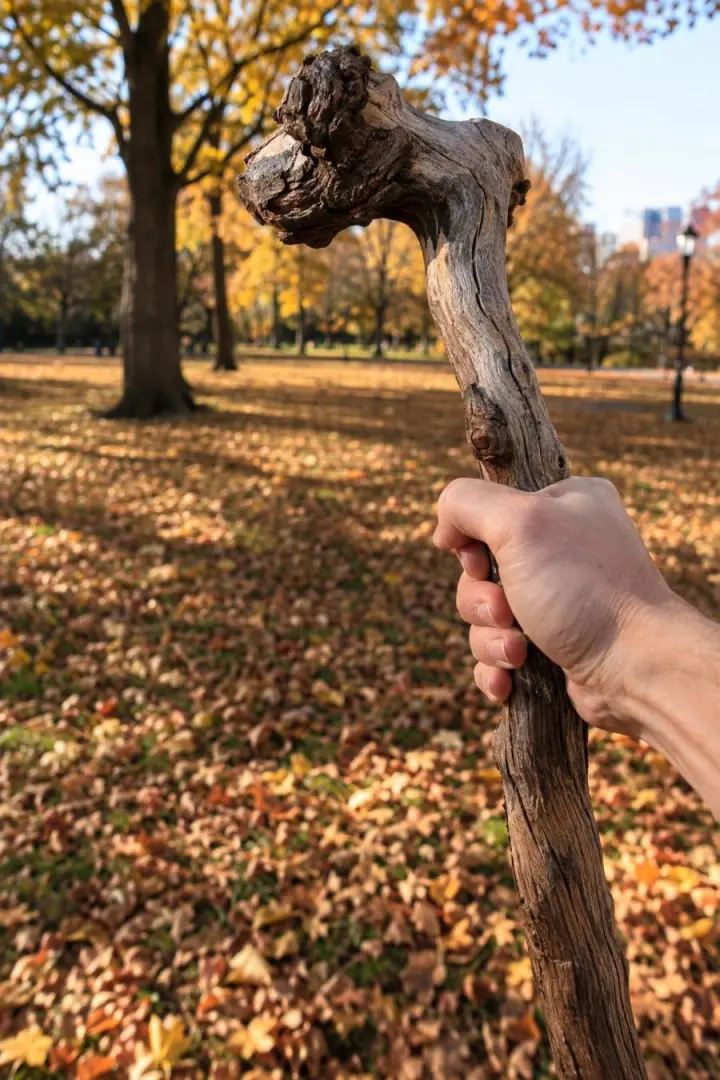
A good walking stick feels like part of your arm. It takes some weight on hills, steadies you on uneven ground and gives you something to point at views with. Here is what to look for, whether you are choosing one or making your own from a found stick.
1. The right height
For a stick used for support, a common rule of thumb is that the top should sit at about the crease of your wrist when you stand up straight with your arms relaxed at your sides. Holding it, your elbow bends slightly. For a hiking staff or thumbstick used mostly for balance on rough ground, many people prefer something taller, around chest height or above. If you need a stick for a medical reason, ask a physiotherapist to fit it.
2. A strong, straight shaft
Look for a shaft that is straight or gently curved, with no cracks, splits or soft spots. Knots are fine and add character, but a deep knot in a thin shaft is a weak point. The shaft should be thick enough that it does not flex much when you lean on it.
3. The best woods
- Hazel: light, straight and the traditional choice for walking sticks and thumbsticks.
- Ash: strong and springy, absorbs knocks well.
- Sweet chestnut: straight and durable.
- Blackthorn: dense and knobbly, heavy but handsome.
- Hickory: very tough, popular in North America.
Willow, birch and most softwoods are lighter but weaker. Lovely to collect, less good to lean on. More in our species guide.
4. A comfortable handle
- Knob: a natural root or knot on top. Classic and comfortable.
- Thumbstick: a natural fork at the top for your thumb. Great for walking on hills.
- Crook or hook: curved, traditionally of horn, and handy for hanging on your arm.
- Plain staff: no handle, just grip it where it suits.
5. Weight and balance
Heavy sticks feel solid but tire your arm over a long day. Pick it up and walk with it before you commit. The best ones feel slightly heavier at the bottom, which helps them swing naturally.
6. A tip that lasts
A bare wooden end wears down and can split. A rubber or metal ferrule on the bottom protects it and improves grip on hard surfaces.
7. Seasoned wood
If you are making a stick from fresh wood, let it dry slowly in a cool, airy place for several months before you use it, ideally kept straight. Rushed drying causes cracks.
Found a contender? Scan it in Stick League. A good walking stick will not always score Legendary, but the judges do respect a well-made staff.
Questions
How tall should a walking stick be?
A common rule of thumb for a support stick is the top at your wrist crease when you stand with arms relaxed. Hiking staffs and thumbsticks are often taller, around chest height. For medical use, get fitted by a physiotherapist.
What is the best wood for a walking stick?
Hazel is the traditional favourite because it is light and straight. Ash, sweet chestnut, blackthorn and hickory are all strong choices.