Guide
Common tree species for sticks, and how to tell them apart
A field guide to the woods you will actually find on the ground, and what each is good for.
By the Stick League team ·
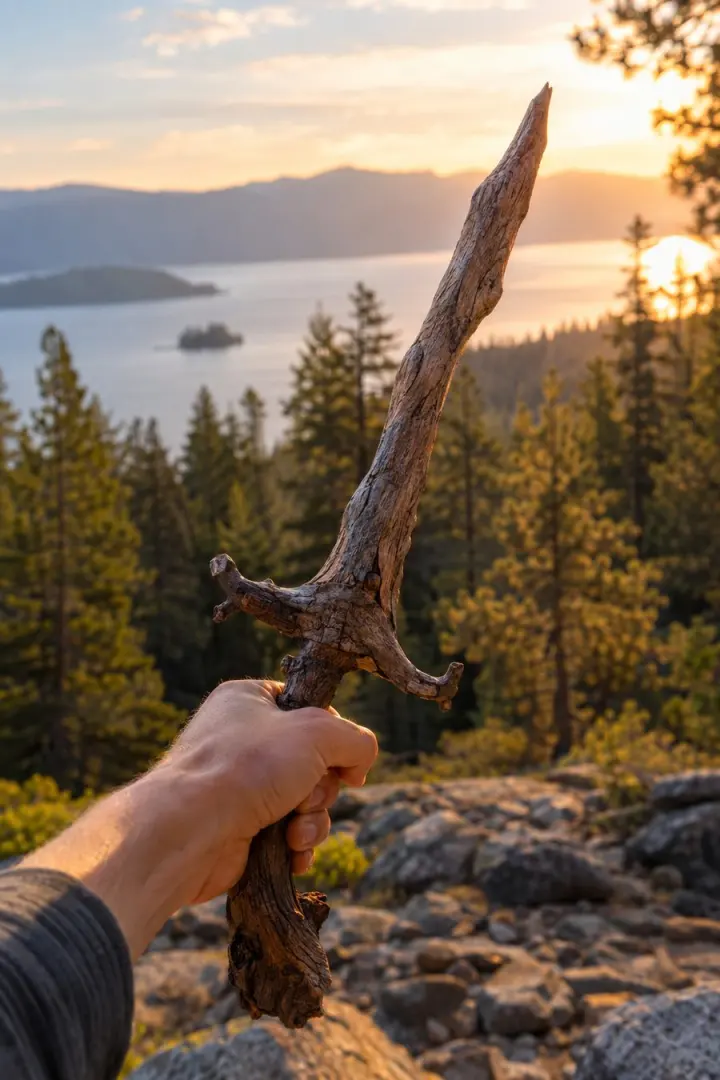
You do not need to be a botanist to guess where a stick came from. Bark, colour, weight and the tree it fell under will get you most of the way. Here are the species you are most likely to find, and what they are like in the hand.
Hazel
The traditional stickmaker's favourite in Britain and Europe. Hazel grows as many straight stems from one base, especially when coppiced, so it gives long, even, light rods. The bark is smooth, shiny and brown to grey, often with pale speckles. Ideal for walking sticks and thumbsticks.
Ash
Tough and springy, which is why ash has long been used for tool handles and hurleys. Young ash has smooth grey bark; twigs end in distinctive black buds. Across Europe many ash trees are being lost to ash dieback, so fallen ash wood is common in some areas.
Oak
Heavy, dense and full of character. Older bark is deeply ridged; branches twist and kink, which makes oak a great source of gnarled, knobbly sticks. Fresh oak can stain dark where it touches iron because of its tannins.
Blackthorn
A thorny hedgerow shrub with very dark bark and white spring blossom. Its knobbly, dense stems are the traditional wood for the Irish shillelagh. Handle with care: the thorns are long and sharp.
Sweet chestnut
Another coppice species, with long straight poles and bark that develops a spiral twist as it ages. Durable and a popular walking-stick wood.
Birch
Easy to spot: silver birch and paper birch have white, papery bark. Birch is light, but fallen birch rots quickly inside its bark, so test that it is still firm before you get attached.
Willow
Light, flexible and fast-growing, found near water. Thin willow stems (osiers) are used for basketry. Larger willow sticks are soft and not very strong, but often wonderfully curved.
Holly
Pale, dense, fine-grained wood under smooth grey bark. Straight holly shoots make handsome, heavy sticks. The glossy, spiny evergreen leaves give the tree away.
Hickory and maple
In North America, hickory is the classic handle wood: hard, heavy and shock-resistant, with shaggy bark on some species. Hard maple is dense and pale. Both make sturdy sticks.
Pine and other conifers
Softer and lighter, often sticky with resin and studded with knots where branches grew. Pine sticks are rarely elegant, but weathered pine roots and branches can be spectacular.
Driftwood
Not a species, but a category of its own. Sun, salt and sand strip the bark and leave pale, smooth, sculptural pieces. The original tree is often impossible to tell, which is why the judges sometimes say “Unknown Hardwood”.
Quick identification tips
- Look up. A fallen stick usually belongs to the tree above it.
- Check the bark: smooth, ridged, papery, shiny or shaggy.
- Check buds and leaf scars on the twig end. Ash's black buds and hazel's small round buds are easy wins.
- Feel the weight. Oak, holly and hickory feel heavy for their size; willow, birch and pine feel light.
Stick League guesses the species from your photo. It is often right for common trees and honest when it is not sure. For more on what the judges look for, see how the rating works.